
Login
Streamlining Supply Chain Operations for Livsys
May 8, 2026
By the Source Asia Team
What did operations look like before?
At Livsys, production demand was growing rapidly, but inventory and procurement processes were struggling to keep pace. Frequent stock-outs had become a recurring operational challenge, especially for imported components and long lead-time materials sourced from China.
Procurement visibility was limited, and teams often had to rely on manual coordination across vendors, follow-ups, and internal communication to understand material status. Delays in sourcing, uncertainty around shipments, and compliance-related bottlenecks made planning difficult and created pressure on day-to-day operations.
As production requirements evolved, the lack of centralized visibility across procurement, inventory, and consumption made it harder to maintain consistent material availability on the shop floor.
How did we change the approach?
Instead of treating procurement, inventory, and compliance as separate activities, we approached them as part of a connected supply chain system.
Through Source Asia’s support, China procurement processes were streamlined with closer vendor coordination, structured sourcing workflows, and improved tracking of imported materials. Compliance and documentation handling were also standardized to reduce delays and improve reliability during procurement and inward movement of materials.
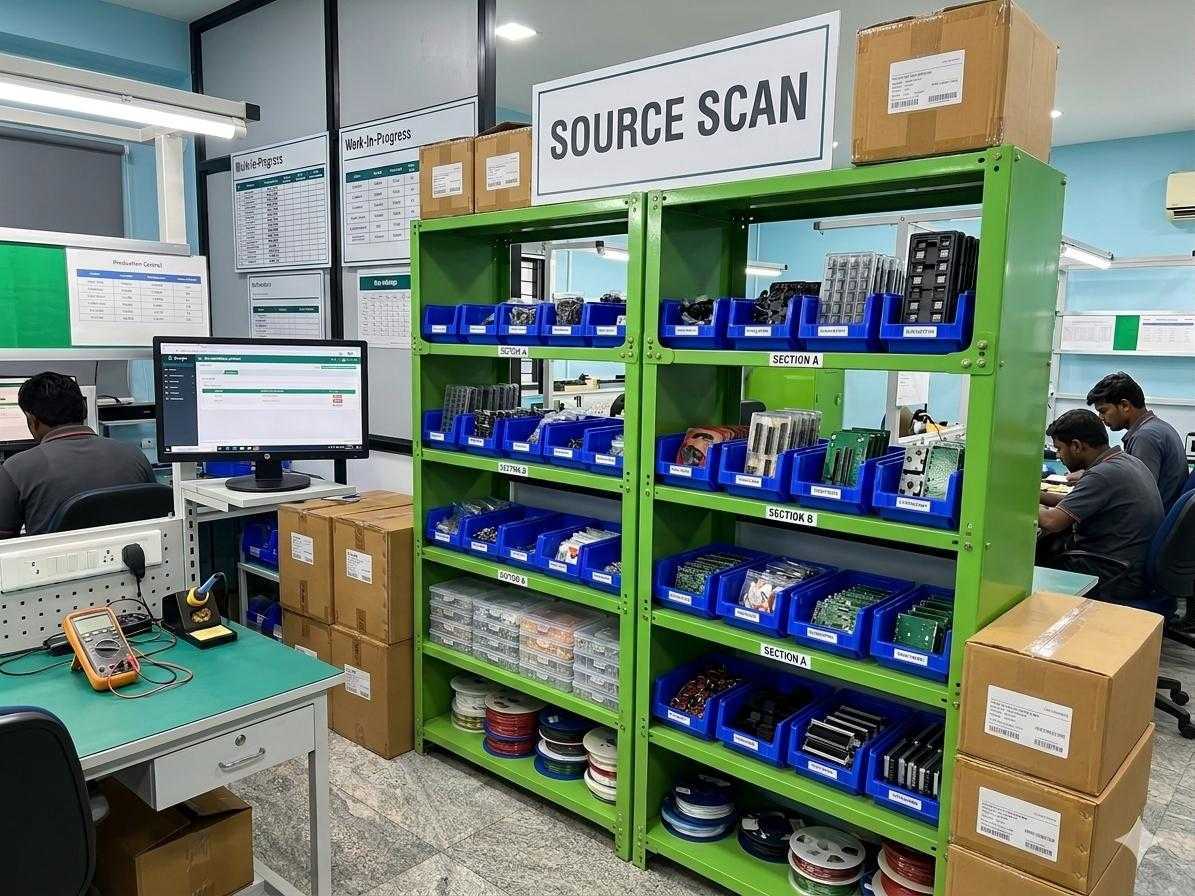
At the same time, we deployed ERP-based inventory and procurement visibility systems to help the Livsys team gain better control over operations. Material movement, inventory availability, procurement status, and consumption tracking could now be viewed through a centralized system instead of depending entirely on manual updates and follow-ups.
This created a more structured and transparent operational flow across procurement and inventory management.
What changed on the shop floor?
The biggest impact was operational predictability.
With improved procurement planning and better inventory visibility, stock-outs became significantly less frequent, and teams had greater confidence in material availability. Production planning became smoother because procurement status and inventory information were easier to access and act upon.
The ERP deployment also improved coordination between teams by creating visibility into inventory movement and procurement progress in real time. Instead of reacting to shortages after they occurred, teams could identify risks earlier and plan proactively.
Over time, inventory management shifted from being a recurring operational issue to becoming a more stable and manageable process that supported production instead of disrupting it.
The result was a more streamlined supply chain environment with better visibility, improved procurement coordination, and stronger operational continuity across the facility.
Streamlining Supply Chain Operations for Livsys
May 8, 2026
By the Source Asia Team
What did operations look like before?
At Livsys, production demand was growing rapidly, but inventory and procurement processes were struggling to keep pace. Frequent stock-outs had become a recurring operational challenge, especially for imported components and long lead-time materials sourced from China.
Procurement visibility was limited, and teams often had to rely on manual coordination across vendors, follow-ups, and internal communication to understand material status. Delays in sourcing, uncertainty around shipments, and compliance-related bottlenecks made planning difficult and created pressure on day-to-day operations.
As production requirements evolved, the lack of centralized visibility across procurement, inventory, and consumption made it harder to maintain consistent material availability on the shop floor.
How did we change the approach?
Instead of treating procurement, inventory, and compliance as separate activities, we approached them as part of a connected supply chain system.
Through Source Asia’s support, China procurement processes were streamlined with closer vendor coordination, structured sourcing workflows, and improved tracking of imported materials. Compliance and documentation handling were also standardized to reduce delays and improve reliability during procurement and inward movement of materials.
At the same time, we deployed ERP-based inventory and procurement visibility systems to help the Livsys team gain better control over operations. Material movement, inventory availability, procurement status, and consumption tracking could now be viewed through a centralized system instead of depending entirely on manual updates and follow-ups.
This created a more structured and transparent operational flow across procurement and inventory management.
What changed on the shop floor?
The biggest impact was operational predictability.
With improved procurement planning and better inventory visibility, stock-outs became significantly less frequent, and teams had greater confidence in material availability. Production planning became smoother because procurement status and inventory information were easier to access and act upon.
The ERP deployment also improved coordination between teams by creating visibility into inventory movement and procurement progress in real time. Instead of reacting to shortages after they occurred, teams could identify risks earlier and plan proactively.
Over time, inventory management shifted from being a recurring operational issue to becoming a more stable and manageable process that supported production instead of disrupting it.
The result was a more streamlined supply chain environment with better visibility, improved procurement coordination, and stronger operational continuity across the facility.
Streamlining Supply Chain Operations for Livsys
May 8, 2026
By the Source Asia Team
What did operations look like before?
At Livsys, production demand was growing rapidly, but inventory and procurement processes were struggling to keep pace. Frequent stock-outs had become a recurring operational challenge, especially for imported components and long lead-time materials sourced from China.
Procurement visibility was limited, and teams often had to rely on manual coordination across vendors, follow-ups, and internal communication to understand material status. Delays in sourcing, uncertainty around shipments, and compliance-related bottlenecks made planning difficult and created pressure on day-to-day operations.
As production requirements evolved, the lack of centralized visibility across procurement, inventory, and consumption made it harder to maintain consistent material availability on the shop floor.
How did we change the approach?
Instead of treating procurement, inventory, and compliance as separate activities, we approached them as part of a connected supply chain system.
Through Source Asia’s support, China procurement processes were streamlined with closer vendor coordination, structured sourcing workflows, and improved tracking of imported materials. Compliance and documentation handling were also standardized to reduce delays and improve reliability during procurement and inward movement of materials.
At the same time, we deployed ERP-based inventory and procurement visibility systems to help the Livsys team gain better control over operations. Material movement, inventory availability, procurement status, and consumption tracking could now be viewed through a centralized system instead of depending entirely on manual updates and follow-ups.
This created a more structured and transparent operational flow across procurement and inventory management.
What changed on the shop floor?
The biggest impact was operational predictability.
With improved procurement planning and better inventory visibility, stock-outs became significantly less frequent, and teams had greater confidence in material availability. Production planning became smoother because procurement status and inventory information were easier to access and act upon.
The ERP deployment also improved coordination between teams by creating visibility into inventory movement and procurement progress in real time. Instead of reacting to shortages after they occurred, teams could identify risks earlier and plan proactively.
Over time, inventory management shifted from being a recurring operational issue to becoming a more stable and manageable process that supported production instead of disrupting it.
The result was a more streamlined supply chain environment with better visibility, improved procurement coordination, and stronger operational continuity across the facility.