
Login
Eliminating Line
Stoppages at Nordson
April 20, 2026
By the Source Asia Team
What did inventory look like before?
At Nordson Corporation, operations are built around precision. Their teams work in environments where consistency and uptime are critical. But like many manufacturing facilities, indirect inventory didn’t always offer the same level of clarity.
When we first started working together, the data was there; Inventory was being tracked, orders were placed, and usage could be reviewed. But understanding what was actually happening on the shop floor wasn’t always immediate. It often required manual effort, insights often came after the fact, requiring manual checks and follow-ups to understand stock levels. That gap made it harder to stay fully aligned with
production, especially during critical moments.
How did we change the approach?
Instead of adding more layers of tracking or reporting, we focused on simplifying how inventory functioned within the facility.
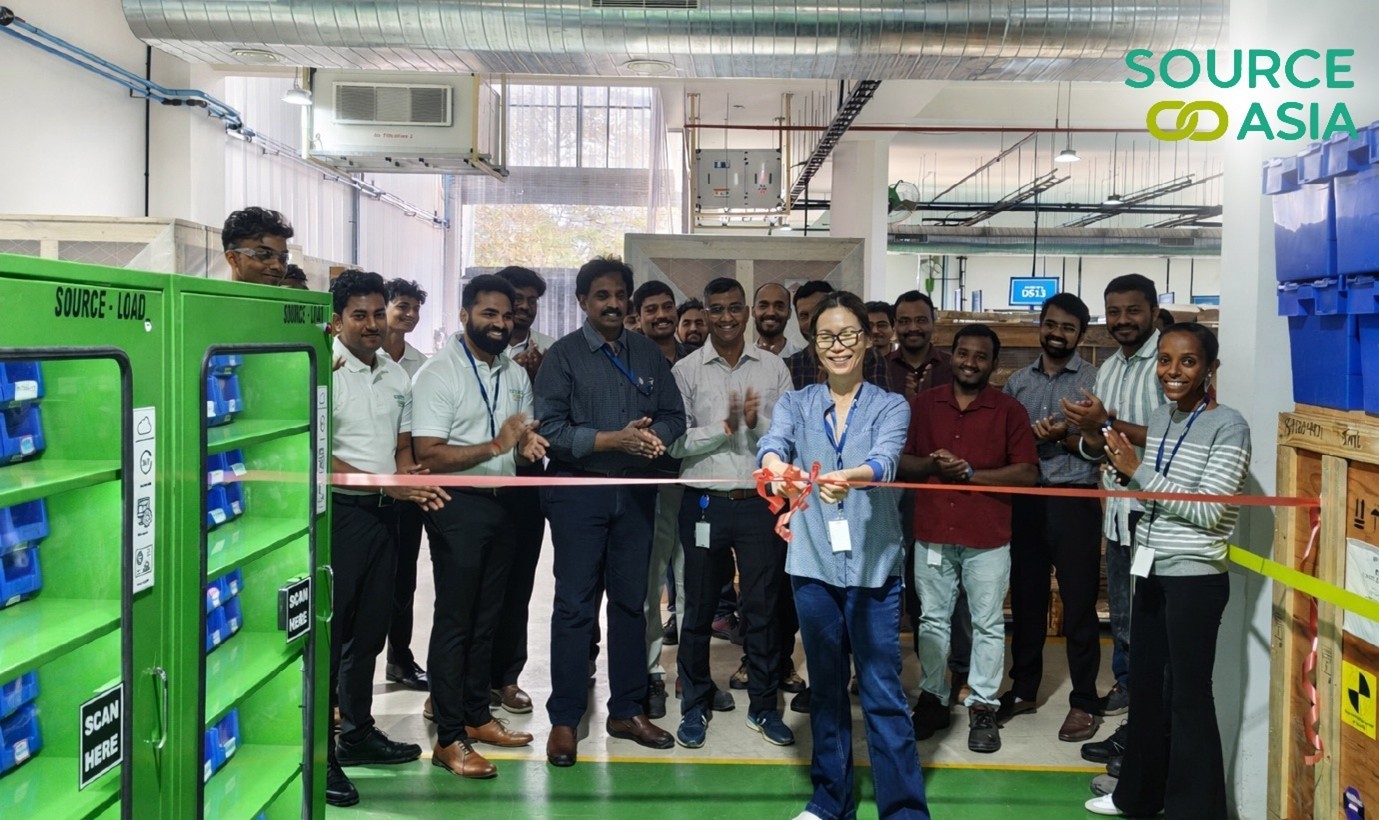
Through our ON-SITE Vendor Managed Inventory (VMI) model, we placed inventory directly at the point of use and took responsibility for keeping it available. Teams no longer had to manage stock or follow up on replenishment—the materials they needed were already in place, aligned with how work was being done.
For items outside the managed inventory, we supported operations through responsive spot buying, ensuring that additional requirements could be fulfilled quickly without slowing production.
What changed on the shop floor?
The impact showed up in the day-to-day flow of work.
With inventory consistently available, teams no longer had to pause production to locate parts or raise urgent requests. Interruptions became less frequent, and operations started to feel more predictable. Inventory stopped being something that needed attention and became something that simply supported the process.
As one of the stakeholders at Nordson shared, “we have never faced line stoppage thanks to you guys.” It’s a simple statement, but it reflects what matters most: keeping production moving without disruption.
Over time, inventory management moved into the background, aligned with usage, responsive to demand, and reliable without requiring constant oversight.
Eliminating Line
Stoppages at Nordson
April 20, 2026
By the Source Asia Team
What did inventory look like before?
At Nordson Corporation, operations are built around precision. Their teams work in environments where consistency and uptime are critical. But like many manufacturing facilities, indirect inventory didn’t always offer the same level of clarity.
When we first started working together, the data was there; Inventory was being tracked, orders were placed, and usage could be reviewed. But understanding what was actually happening on the shop floor wasn’t always immediate. It often required manual effort, insights often came after the fact, requiring manual checks and follow-ups to understand stock levels. That gap made it harder to stay fully aligned with
production, especially during critical moments.
How did we change the approach?
Instead of adding more layers of tracking or reporting, we focused on simplifying how inventory functioned within the facility.
Through our ON-SITE Vendor Managed Inventory (VMI) model, we placed inventory directly at the point of use and took responsibility for keeping it available. Teams no longer had to manage stock or follow up on replenishment—the materials they needed were already in place, aligned with how work was being done.
For items outside the managed inventory, we supported operations through responsive spot buying, ensuring that additional requirements could be fulfilled quickly without slowing production.
What changed on the shop floor?
The impact showed up in the day-to-day flow of work.
With inventory consistently available, teams no longer had to pause production to locate parts or raise urgent requests. Interruptions became less frequent, and operations started to feel more predictable. Inventory stopped being something that needed attention and became something that simply supported the process.
As one of the stakeholders at Nordson shared, “we have never faced line stoppage thanks to you guys.” It’s a simple statement, but it reflects what matters most: keeping production moving without disruption.
Over time, inventory management moved into the background, aligned with usage, responsive to demand, and reliable without requiring constant oversight.

Eliminating Line
Stoppages at Nordson
April 20, 2026
By the Source Asia Team
What did inventory look like before?
At Nordson Corporation, operations are built around precision. Their teams work in environments where consistency and uptime are critical. But like many manufacturing facilities, indirect inventory didn’t always offer the same level of clarity.
When we first started working together, the data was there; Inventory was being tracked, orders were placed, and usage could be reviewed. But understanding what was actually happening on the shop floor wasn’t always immediate. It often required manual effort, insights often came after the fact, requiring manual checks and follow-ups to understand stock levels. That gap made it harder to stay fully aligned with production, especially during critical moments.
How did we change the approach?
Instead of adding more layers of tracking or reporting, we focused on simplifying how inventory functioned within the facility.
Through our ON-SITE Vendor Managed Inventory (VMI) model, we placed inventory directly at the point of use and took responsibility for keeping it available. Teams no longer had to manage stock or follow up on replenishment—the materials they needed were already in place, aligned with how work was being done.
For items outside the managed inventory, we supported operations through responsive spot buying, ensuring that additional requirements could be fulfilled quickly without slowing production.
What changed on the shop floor?
The impact showed up in the day-to-day flow of work.
With inventory consistently available, teams no longer had to pause production to locate parts or raise urgent requests. Interruptions became less frequent, and operations started to feel more predictable. Inventory stopped being something that needed attention and became something that simply supported the process.
As one of the stakeholders at Nordson shared, “we have never faced line stoppage thanks to you guys.” It’s a simple statement, but it reflects what matters most: keeping production moving without disruption.
Over time, inventory management moved into the background, aligned with usage, responsive to demand, and reliable without requiring constant oversight.